Last updated: February 26, 2026
Key Takeaways
- ZipTie AI Search Analytics (available at ziptie.dev) is a specialized platform that tracks how and whether brands appear inside AI-generated answers on Google AI Overviews, ChatGPT, and Perplexity.
- Traditional SEO tools track keyword rankings on search result pages. ZipTie tracks brand mentions, citations, and sentiment inside AI answers a fundamentally different signal.
- Each tracked query receives an AI Success Score based on mentions, citations, and sentiment, giving teams a clear priority list for content optimization.
- The platform identifies which competitors are winning in AI answers and on which specific engines, enabling direct competitive gap analysis.
- ZipTie uses real browser technology (not older LLM-based methods) to capture live AI results, including exact answer text and downloadable screenshots.
- Enterprise agencies, including Seer Interactive, have deployed ZipTie across thousands of client queries weekly, confirming its scalability.
- The discipline ZipTie supports is called Generative Engine Optimization (GEO) distinct from traditional SEO and it’s becoming a core skill for digital marketers in 2026.
- Known limitations include processing delays during peak hours and a small reduction in Google detection rates due to smart-blocking measures, which the ZipTie team is actively addressing.
- The tool is most valuable for IT services, B2B, and professional service brands where buyers research vendors through AI assistants before visiting websites.
Quick Answer
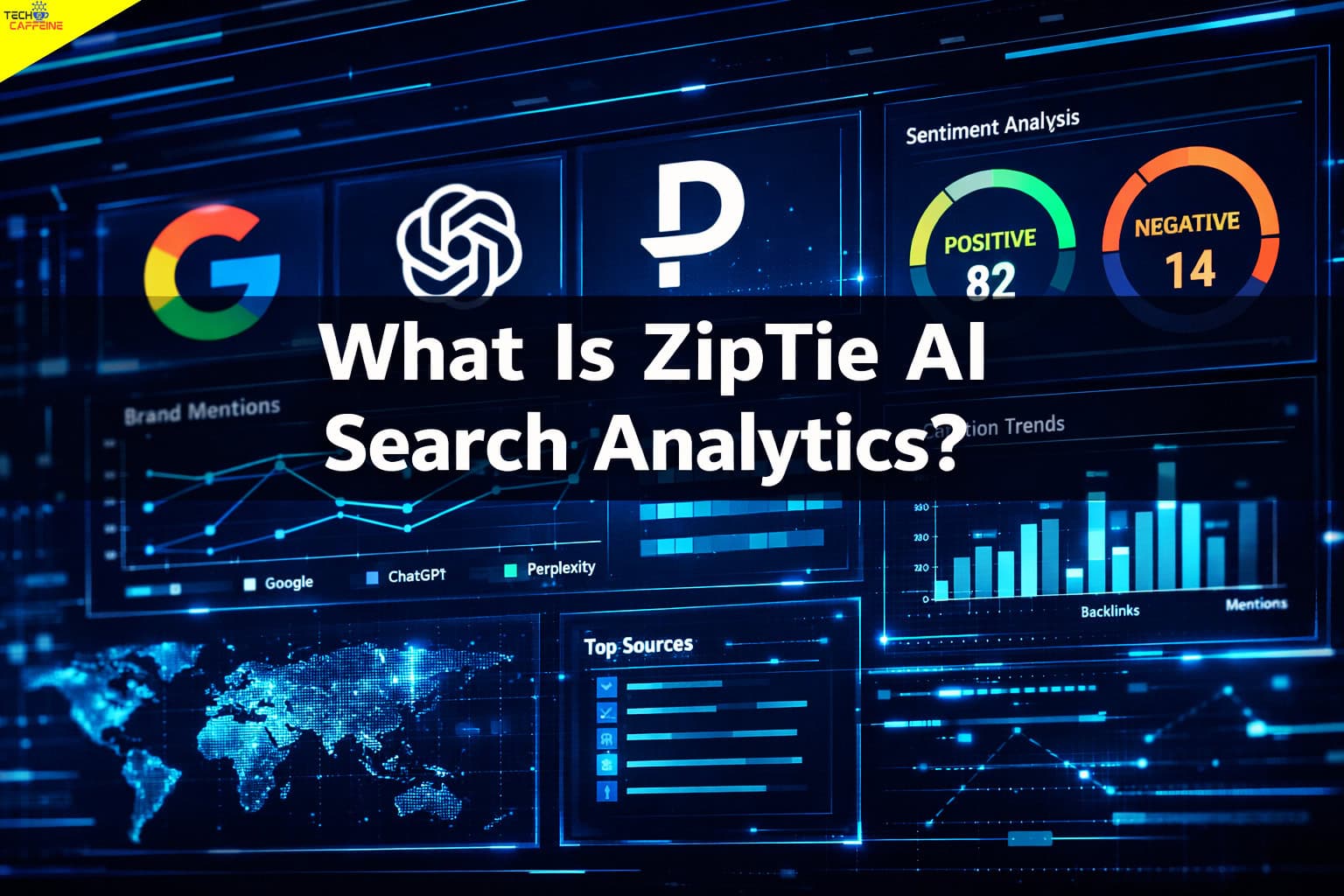
ZipTie AI Search Analytics is a monitoring and optimization platform that tracks brand visibility inside AI-generated search answers specifically across Google AI Overviews, ChatGPT, and Perplexity. It provides metrics like brand mentions, citation tracking, sentiment analysis, and competitive share-of-voice in a single dashboard. For SEO professionals and digital marketers, it answers the question traditional rank trackers cannot: Is my brand being recommended when AI answers a buyer’s question?
What Is ZipTie AI Search Analytics, and Why Does It Exist?
The search landscape changed fundamentally when AI-generated answers began replacing the traditional “ten blue links.” Users now ask questions directly to AI assistants and act on the answers they receive often without clicking through to a website at all. ZipTie AI Search Analytics was built specifically to address this shift.
ZipTie exists because no traditional SEO tool was designed to answer one critical question: does your brand appear in AI-generated answers?
Standard rank trackers report your position on a search engine results page. They cannot tell you whether Google’s AI Overview mentions your brand, whether ChatGPT recommends your product, or whether Perplexity cites your content. ZipTie fills that gap by monitoring three major AI search systems simultaneously and reporting on brand presence within the actual generated text.
The platform is built for:
- SEO professionals managing AI search visibility for clients
- Content marketers who need to know which topics to cover to earn AI citations
- Marketing managers tracking brand reputation inside AI answers
- Product and service teams at companies where buyers use AI assistants to shortlist vendors before visiting a website
“They have a nice interface for tracking rankings on AI Overviews and the data seems accurate.” SEO professional on r/SEO
If your buyers are asking AI assistants which software to buy, which agency to hire, or which product to trust, ZipTie tells you whether your brand is part of that conversation.
How Does ZipTie AI Search Analytics Work?
ZipTie operates by submitting tracked queries to live AI engines using real browser technology, then analyzing the generated responses for brand mentions, citations, and sentiment.
The core workflow is straightforward:
- Add your tracked queries – these are the questions and keywords your target buyers ask AI assistants (for example, “best CRM software for small businesses” or “top SEO agencies in Chicago”).
- ZipTie submits those queries to Google AI Overviews, ChatGPT, and Perplexity simultaneously.
- The platform captures the live AI-generated answer, including exact text, cited sources, and any brand mentions.
- Results are analyzed for mentions (was your brand named?), citations (was your content linked?), and sentiment (was the mention positive, neutral, or negative?).
- An AI Success Score is assigned to each query, giving teams a ranked list of where they’re winning and where they’re losing in AI search.
Why real browser technology matters: Some earlier AI tracking tools used cached LLM outputs or API calls that don’t reflect what a real user sees. ZipTie uses actual browser rendering to capture live results, which means the data reflects current AI behavior rather than a snapshot from days or weeks ago. This is a meaningful technical distinction when AI models update their outputs frequently.
The platform also captures downloadable screenshots of AI answers, which is useful for client reporting, competitive documentation, and tracking changes over time.
What Metrics Does ZipTie Provide?
ZipTie surfaces four primary categories of data, each designed to answer a specific strategic question about AI search visibility.
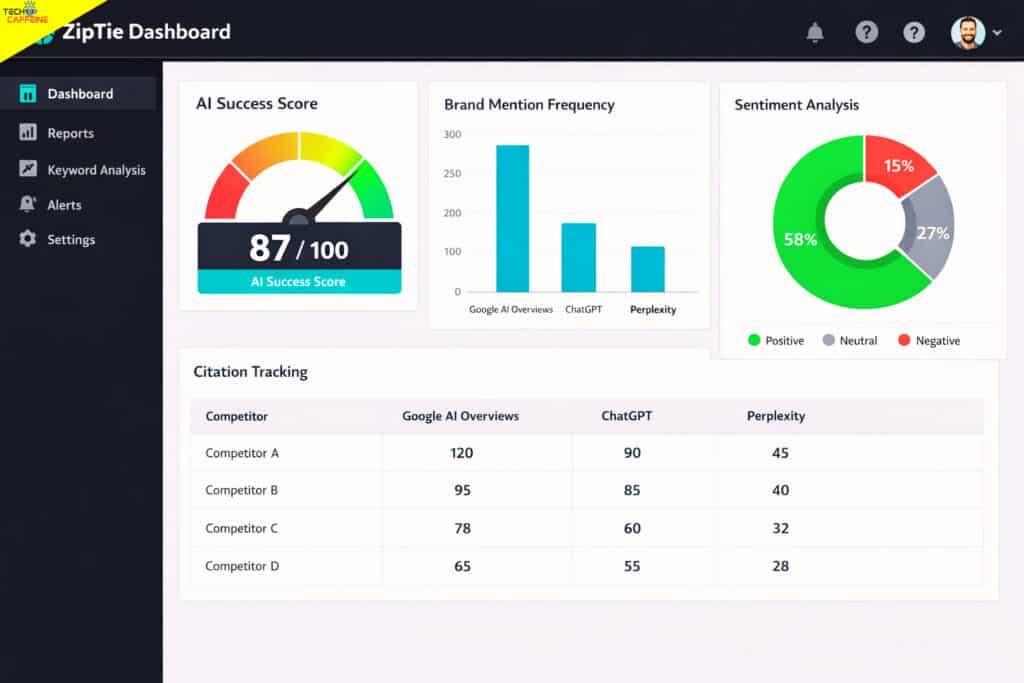
Brand Mentions
How often does your brand name appear in AI-generated answers for your tracked queries? This is the foundational metric if your brand isn’t being mentioned, no other optimization matters yet. ZipTie tracks mention frequency across all three AI engines separately, so you can see whether you’re visible on ChatGPT but invisible on Google AI Overviews.
Citation Tracking
Being mentioned and being cited are different things. A citation means the AI answer linked to your content as a source. Citation tracking tells you which of your pages are being used as reference material by AI systems, and which competitor pages are being cited instead of yours.
Sentiment Analysis
Not all mentions are positive. ZipTie classifies each brand mention as positive, neutral, or negative based on the surrounding context in the AI answer. A brand mentioned as “expensive compared to alternatives” is technically present but strategically harmful. Sentiment analysis surfaces these cases so teams can respond.
AI Success Score
Each tracked query receives a composite AI Success Score that combines mention frequency, citation presence, and sentiment. This score lets teams prioritize: a query with a low score and high commercial intent is a higher-priority content gap than a query where you’re already winning.
| Metric | What It Answers | Strategic Use |
|---|---|---|
| Brand Mentions | Is my brand named in AI answers? | Baseline visibility tracking |
| Citation Tracking | Is my content being sourced by AI? | Content authority building |
| Sentiment Analysis | Is the mention helping or hurting? | Reputation management |
| AI Success Score | Where should I focus first? | Content prioritization |
| Competitive Share-of-Voice | Who’s winning the queries I’m losing? | Gap and opportunity analysis |
Competitive Benchmarking
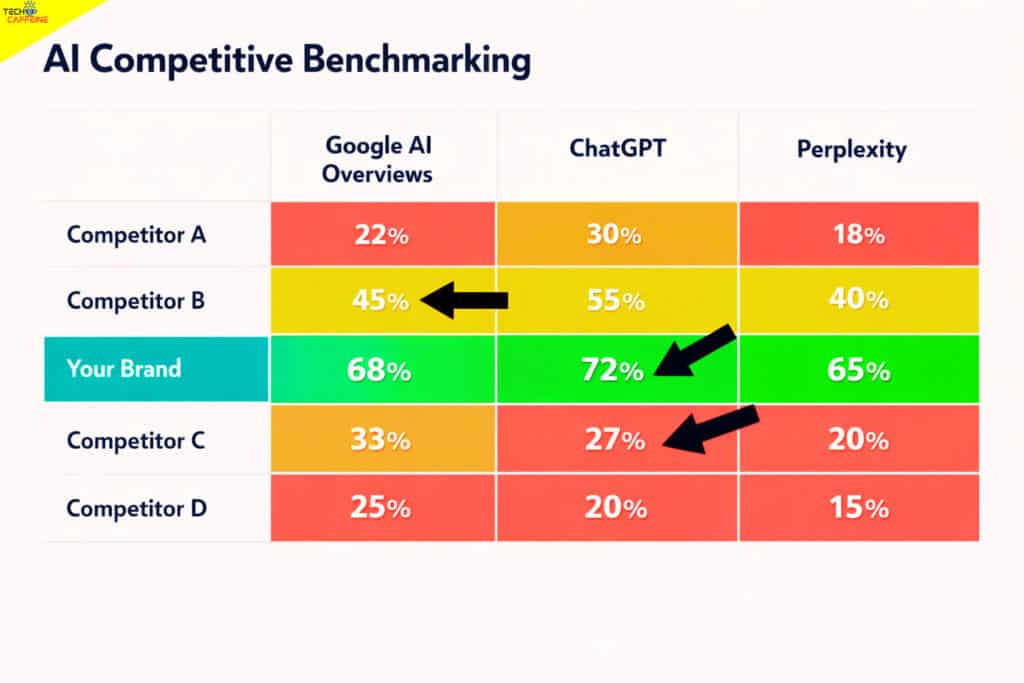
ZipTie identifies which competitors appear in AI answers for your tracked queries and which specific engines they’re winning on. This competitive share-of-voice view is one of the most actionable features for agencies and enterprise teams. If a competitor consistently appears in ChatGPT answers but not Google AI Overviews for the same query, that’s a signal about content type and source authority not just keyword strategy.
What Is ZipTie AI Search Analytics Doing Differently From Traditional SEO Tools?
Traditional SEO tools and ZipTie are solving different problems. Understanding the distinction is essential before deciding where to invest time and budget.
Traditional SEO tools (Ahrefs, Semrush, Moz, etc.) track:
- Keyword rankings on search engine results pages (SERPs)
- Backlink profiles
- On-page technical health
- Organic traffic estimates
ZipTie AI Search Analytics tracks:
- Brand presence inside AI-generated answers
- Which sources AI engines cite as authoritative
- Sentiment of brand mentions within AI responses
- Competitive visibility across AI engines specifically
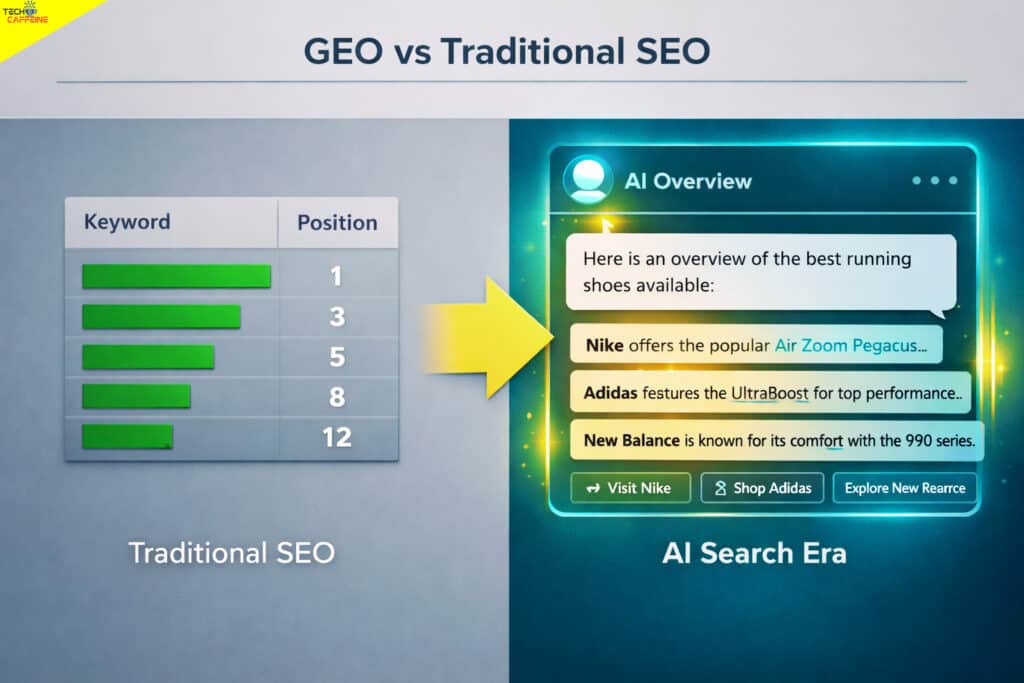
These are complementary, not competing, data sets. A brand can rank #1 on Google’s traditional SERP and still be absent from Google’s AI Overview for the same query. Conversely, a brand with modest traditional rankings might be frequently cited in AI answers because its content directly addresses the questions AI systems are trying to answer.
For a deeper understanding of how large language models generate these answers, see this complete guide to large language models it explains the underlying technology that ZipTie monitors.
GEO focuses on structuring content so that AI systems recognise it as authoritative and directly relevant to user questions – and it works best when tracking tools like ZipTie are integrated into your overall generative engine optimisation strategy from the start. Traditional SEO optimizes for ranking algorithms. GEO optimizes for being cited and recommended by AI reasoning systems.
GEO is not a replacement for SEO. It’s an additional layer of visibility strategy that reflects where a growing share of search behavior is happening.
Who Should Use ZipTie, and Who Probably Shouldn’t?
ZipTie is a specialized tool. It’s most valuable in specific contexts and less useful in others.
Use ZipTie if:
- Your buyers research vendors, products, or services using AI assistants before visiting websites (common in B2B, IT services, professional services, and SaaS)
- You manage SEO for multiple clients and need to report on AI search visibility at scale
- Your brand operates in a competitive category where AI answers frequently recommend specific brands
- You’re running a content strategy and need to identify which topic gaps are costing you AI citations
- You want to track the impact of new content publications on AI visibility in near real-time
ZipTie is less critical if:
- Your business relies primarily on local search, where AI Overviews are less prevalent
- Your audience is not yet using AI assistants for research in your category
- Your marketing budget is too constrained to act on the insights the tool provides
For agencies, ZipTie’s scalability is a practical advantage. Seer Interactive, for example, monitors over 7,800 searches weekly across client accounts using the platform. That kind of volume would be impossible to track manually.
What Are the Known Limitations of ZipTie?
No tool is without trade-offs, and ZipTie is transparent about its current constraints.
Processing delays during peak hours. Because ZipTie submits real browser queries to live AI engines, high demand periods create queuing delays. This is partly a function of rate-limiting imposed by the AI platforms themselves.
Google smart-blocking. Google has implemented detection measures that have reduced ZipTie’s AI Overview capture rates by a small percentage. The ZipTie team is actively working on solutions, but users should be aware that Google AI Overview data may occasionally be incomplete.
AI model volatility. AI-generated answers can change between queries even for the same question. ZipTie captures a real-time snapshot, but AI outputs are not static. This is an industry-wide challenge, not unique to ZipTie.
Not a replacement for traffic data. ZipTie tells you about AI visibility, not about clicks or conversions. It should be paired with traditional analytics tools to connect AI mention data to actual business outcomes.
These limitations are worth knowing before committing to a plan, but they don’t undermine the core value proposition. The alternative not tracking AI search visibility at all leaves a significant and growing blind spot in any digital marketing strategy.
How to Get Started With ZipTie AI Search Analytics
Getting started with ZipTie is practical and doesn’t require technical expertise. Here’s a straightforward onboarding path:
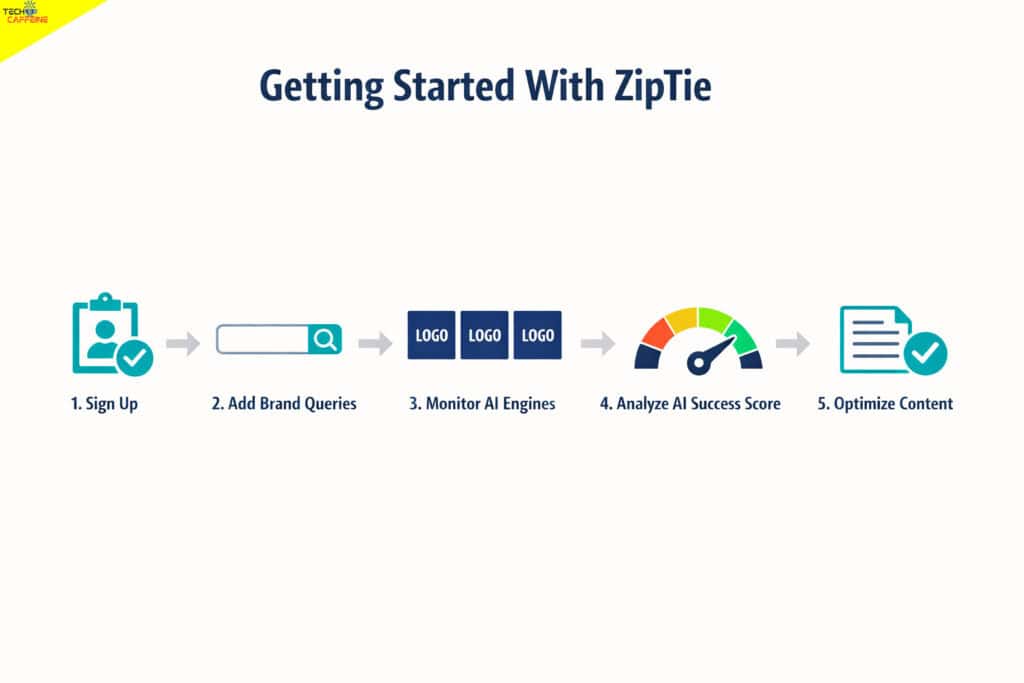
- Sign up at ziptie.dev. The platform offers plans suited to individual practitioners and agencies.
- Define your tracked queries. Start with the 20-30 questions your target buyers are most likely to ask AI assistants about your category. Think in full questions, not just keywords (for example, “which email marketing platform is best for e-commerce?” rather than “email marketing platform”).
- Add competitor brands. ZipTie’s competitive benchmarking works best when you specify which competitors to track alongside your brand.
- Review your AI Success Scores. Prioritize queries where your score is low but commercial intent is high these represent the biggest content opportunities.
- Identify content gaps. ZipTie flags topics and questions that buyers are asking but your website doesn’t adequately address. These gaps become your content calendar.
- Publish and monitor. After publishing new content targeting a specific query, track whether your AI Success Score improves over the following weeks.
- Report on share-of-voice. Use ZipTie’s competitive data to show clients or stakeholders how AI visibility is changing relative to competitors over time.
For teams building out their AI marketing stack, this guide to AI personal assistants provides useful context on how end users are interacting with AI systems which directly informs what queries to track in ZipTie.
FAQ: What Is ZipTie AI Search Analytics?
Q: What is ZipTie AI Search Analytics in simple terms?
ZipTie is a tool that checks whether your brand appears in AI-generated answers on Google AI Overviews, ChatGPT, and Perplexity. It tracks mentions, citations, and sentiment so you know if AI systems are recommending your brand to potential buyers .
Q: Is ZipTie the same as a traditional rank tracker?
No. Traditional rank trackers show your position on a search results page. ZipTie tracks your presence inside AI-generated answers, which is a different type of visibility entirely.
Q: What AI engines does ZipTie monitor?
ZipTie monitors Google AI Overviews, ChatGPT, and Perplexity in a single unified dashboard.
Q: What is an AI Success Score?
It’s a composite metric ZipTie assigns to each tracked query, combining brand mention frequency, citation presence, and sentiment analysis. A higher score means stronger AI visibility for that query.
Q: Can ZipTie track competitors?
Yes. ZipTie identifies which competitors appear in AI answers for your tracked queries and shows which engines they’re winning on, enabling direct competitive share-of-voice comparison.
Q: How is ZipTie relevant to Generative Engine Optimization (GEO)?
GEO is the practice of optimizing content to appear in AI-generated answers. ZipTie provides the measurement layer for GEO without it, teams have no reliable way to know whether their GEO efforts are working.
Q: Does ZipTie replace Google Search Console or Ahrefs?
No. ZipTie is complementary to traditional SEO tools, not a replacement. It covers AI search visibility; traditional tools cover SERP rankings, backlinks, and site health.
Q: Is ZipTie suitable for small businesses?
It’s most valuable for businesses where buyers actively use AI assistants to research purchasing decisions. Small businesses in local or low-research categories may find less immediate value than B2B or professional service brands.
Q: How accurate is ZipTie’s data?
ZipTie uses real browser technology to capture live AI results, which is more accurate than API-based or cached approaches. Some reduction in Google AI Overview capture rates has occurred due to Google’s smart-blocking measures, which the team is addressing.
Q: What does ZipTie cost?
Pricing details are available directly at ziptie.dev. Plans appear to scale by query volume, making it accessible for individual practitioners and scalable for agencies managing large client portfolios.
Q: How quickly does AI visibility change after publishing new content?
This varies by AI engine and content type. ZipTie’s real-time monitoring allows teams to observe changes as they happen, but AI model updates mean timelines are not predictable. Tracking over weeks rather than days gives more reliable signal.
Q: Where can I learn more about the AI technology behind these search systems?
For a solid foundation on how AI language models work which directly affects how ZipTie’s tracked engines generate answers see this complete guide to large language models.
Conclusion
The shift toward AI-generated search answers is not a future trend it’s the current reality for a growing share of search queries. Brands that only track traditional keyword rankings are working with an incomplete picture of their search visibility.
ZipTie AI Search Analytics directly addresses that gap. By tracking brand mentions, citations, sentiment, and competitive share-of-voice across Google AI Overviews, ChatGPT, and Perplexity, it gives SEO professionals and marketers the data they need to practice Generative Engine Optimization with the same rigor they apply to traditional SEO.
Actionable next steps:
- Audit your AI visibility today. Sign up at ziptie.dev and run your top 20 buyer-intent queries through the platform. The gap between where you rank on Google and where you appear in AI answers may surprise you.
- Identify your highest-priority content gaps. Focus first on queries with high commercial intent and low AI Success Scores. These represent the clearest opportunities.
- Build GEO into your content workflow. Every new content piece should be evaluated not just for keyword targeting but for whether it directly and authoritatively answers the questions AI systems are trying to resolve.
- Track competitors in AI, not just on SERPs. A competitor winning AI answers for your category’s core questions is capturing buyer attention before they ever reach a search results page.
- Pair ZipTie with traditional analytics. Connect AI mention data to traffic and conversion data to build a complete picture of how AI search visibility affects business outcomes.
For teams building out a broader AI-informed marketing stack, exploring the best AI personal assistants and reviewing AI headshot generators for content production can complement the strategic insights ZipTie provides.
The brands that understand what ZipTie AI Search Analytics does and act on that understanding now will be better positioned as AI-generated answers become the default starting point for buyer research.

Shivakumar K Naik is an SEO Analyst and Technology Writer based in Mysore, Karnataka with 2.5+ years of experience and 28+ client success stories across FinTech, Travel, Automotive, SaaS and Education. He has delivered 150+ Google first-page rankings for brands like Mudrex, Decathlon and Maruti Suzuki. On Tech Caffeine, he writes practical, beginner-friendly guides on AI tools, how to make money online with AI, cryptocurrency, blockchain, NFTs, gaming and emerging technology content built from real SEO experience and daily hands-on use of ChatGPT, Claude, Ahrefs and Semrush.