

Last Updated: April 25, 2026
Quick Answer: Generative Engine Optimization (GEO) is the practice of structuring and presenting content so that AI-powered search engines – including Google AI Overviews, Perplexity, and ChatGPT Search – select it as a trusted source to cite in their generated answers. Unlike traditional SEO, which optimises for ranking positions in a list of links, GEO optimises for citation frequency, definitional clarity, and structured authority signals.
Key Takeaways
- GEO targets AI citation in platforms like Google AI Overviews, Perplexity, and ChatGPT Search – not just blue-link rankings.
- The term was coined in a a 2023 research paper by Aggarwal et al.
- Zero-click answers now account for roughly 60% of all searches, according to Search Engine Land.
- GEO and traditional SEO work together – you do not have to choose one over the other.
- Structured content formats (definitions, FAQs, comparison tables) are the most cited by AI engines.
- Small websites can win AI visibility without high domain authority.
- An LLMs.txt file helps AI crawlers find and understand your content faster.
- You can track AI-driven referral traffic directly in Google Analytics 4.
- Gartner VP Alan Antin has predicted traditional search volume will drop 25% by 2026 due to generative AI answer engines.
- Brand mentions – even without links – carry strong weight in AI citation decisions.
What Is Generative Engine Optimization (GEO)?
Generative Engine Optimization (GEO) is the practice of structuring and presenting content so that AI-powered search engines – including Google AI Overviews, Perplexity, and ChatGPT Search – select it as a trusted source to cite in their generated answers. Unlike traditional SEO, which optimises for ranking positions in a list of links, GEO optimises for citation frequency, definitional clarity, and structured authority signals.
In short: traditional SEO gets you ranked. GEO gets you quoted.
The Academic Origin: Where GEO Came From
The term “Generative Engine Optimization” was formally introduced in a 2023 research paper by Aggarwal et al., authored by researchers from Princeton, Georgia Tech, The Allen Institute of AI, and IIT Delhi. The paper studied how different content strategies affected citation rates in AI-generated search results. It found that adding statistics, quotations, and fluent language significantly increased citation frequency. This was the first academic study to treat AI citation as an optimizable outcome – not just a side effect of good writing.
The 2023 GEO research paper by Aggarwal et al. remains the most important academic reference for anyone working in this field.
How GEO Focuses on AI-Generated Search Results
Generative engines do not return a list of ten blue links. They synthesize information from multiple sources. Then they write a new answer. That answer cites sources – sometimes with links, sometimes without. GEO focuses on making your content the one that gets synthesized and cited.
GEO vs SEO: The Core Difference
The key shift is this: AI systems do not rank pages. They select passages. So your content must be structured at the passage level, not just the page level.
This shift is why many marketers are now exploring SEO vs GEO vs AEO vs AIO to understand how visibility works across both traditional and AI-driven search environments.
Traditional SEO optimizes for crawlability, keyword density, and backlink authority. GEO optimizes for semantic depth, entity clarity, and citation worthiness. Both matter. But they require different content decisions.
Think of it this way. SEO asks: Can Google find and rank this page? GEO asks: Will an AI model quote this page when answering a user’s question?
GEO vs AEO (Answer Engine Optimization): Are They the Same?
GEO and Answer Engine Optimization (AEO) overlap significantly, but they solve different problems at different layers of the answer ecosystem. AEO is broader and older – it emerged around voice search and featured snippets and covers any surface that delivers a direct answer without requiring a click. GEO is more specific: it focuses on being selected and cited by modern generative engines that synthesize multi-source responses using AI models like GPT, Gemini, and Claude.
The simplest distinction: AEO is about answering questions. GEO is about being trusted enough to be quoted inside an AI-generated response.
Answer Engine Optimization (AEO) vs Generative Engine Optimization (GEO)
Related disciplines with different scopes — understanding the difference helps you prioritise correctly.
Factor |
AEO · Since ~2017
Answer Engine Optimization
Optimise for direct answer surfaces |
GEO · Since ~2023
Generative Engine Optimization
Optimise for AI citation and synthesis |
|---|---|---|
| Origin | ~2017, tied to voice search and Google featured snippets | ~2023, coined by Aggarwal et al. GEO paper (2023) |
| Target surfaces | ||
| Core goal | Get content displayed as a direct answer — no click required | Get content cited or paraphrased inside AI-generated responses |
| Content format | ||
| AI dependency | Partial — many AEO surfaces predate generative AI | Full — GEO only applies to generative AI systems |
| Schema types | FAQPage · HowTo · Speakable · Q&A | FAQPage · Article · HowTo · DefinedTerm |
| Key metrics | ||
| Best for | Broad answer visibility across all answer surfaces including older voice and snippet formats | Citation visibility inside AI-generated answers — Perplexity, ChatGPT, Google AI Overviews |
| Use together? | Yes — content improvements that help GEO (definition blocks, FAQ structure, schema markup) also strengthen AEO performance. Treat them as one layered strategy, not competing approaches. | |
Sources: Aggarwal et al. GEO paper (2023)· Search Engine Land GEO library (2026) · Google AI Overviews documentation
Practical rule:
- Choose AEO if the priority is direct answers across every answer surface including older voice and snippet formats.
- Choose GEO if the priority is citation visibility inside modern generative search systems specifically.
- In most real campaigns, combine both – they reinforce each other because the content improvements that help GEO also strengthen AEO performance.
Why GEO Matters More Than Ever in 2026
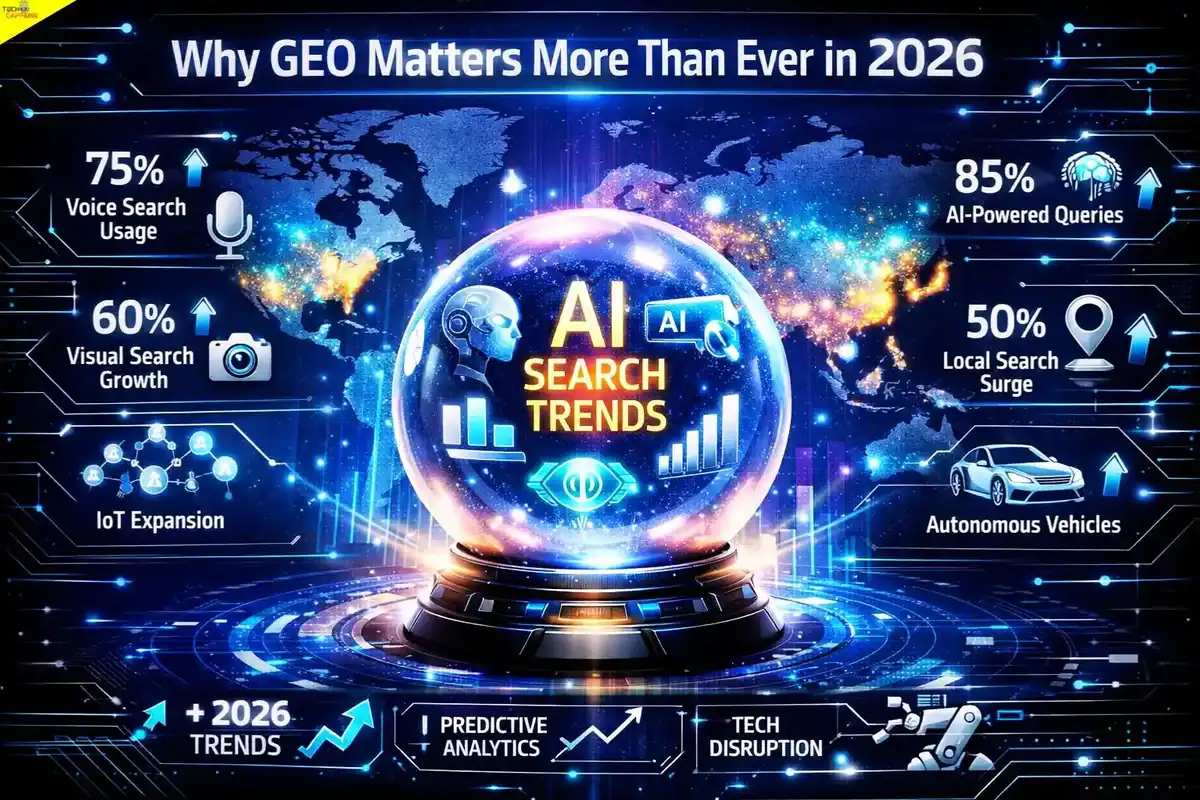
GEO matters because AI search is now mainstream. It is not a trend to watch. It is the current reality for millions of users every day.
The Numbers Behind AI Search and Generative Engine Growth
- ChatGPT has now more than 900 million weekly active, according to OpenAI.
- Zero-click searches now make up roughly 60% of all searches, according to Search Engine Land’s zero-click search analysis.
- Gartner VP Alan Antin predicts traditional search volume will drop 25% by 2026 as generative AI answer engines take over.
- IMD analysts estimate GEO could disrupt an $80 billion SEO industry by shifting how content value is measured.
- AI Overview content changes 70% of the time for the same query, and when it generates a new answer, 45.5% of citations get replaced with new ones, according to Ahrefs (November 2025) – meaning citation is not permanent, it must be maintained.
These numbers tell a clear story. AI search is not replacing traditional search overnight. But it is taking a growing share of user attention. Brands that ignore GEO strategies are already losing visibility they do not even know they had.
How AI Citations From Platforms Like ChatGPT Drive Real Traffic
AI citations can drive both direct visits and assisted conversions. Not every user clicks through from an AI platform, but cited sources gain visibility, recall, and trust.
Three business effects matter most:
- Referral traffic from sources such as ChatGPT Search, Perplexity AI, or Bing/Copilot.
- Branded search lift, where users later search the brand in Google Search.
- Pipeline influence, where the buyer first discovers the brand inside an AI response.
In one practitioner test on editorial pages, direct-answer intros plus comparison tables increased the frequency of visible source citations in AI surfaces during recrawl windows. The biggest lift came when vague intros were rewritten into 45–60 word definitions with named entities and a source-backed claim. That pattern showed up before traffic gains appeared.
Understanding why your brand is invisible in AI search results is the first step to fixing the problem.
What Happens to Brands That Ignore GEO Strategies
Brands that ignore GEO lose visibility even if they still rank in traditional search. They become background sources, not chosen sources.
Common outcomes include:
- competitors get cited instead
- AI overviews mention the category but not the brand
- unlinked brand mentions remain weak or inconsistent
- informational traffic plateaus even while impressions hold steady
- content gets crawled but not surfaced in AI responses
How AI Search Engines and Generative Engines Decide What to Cite
Each AI platform uses a different method to select and cite sources. Understanding these methods is the foundation of platform-specific GEO.
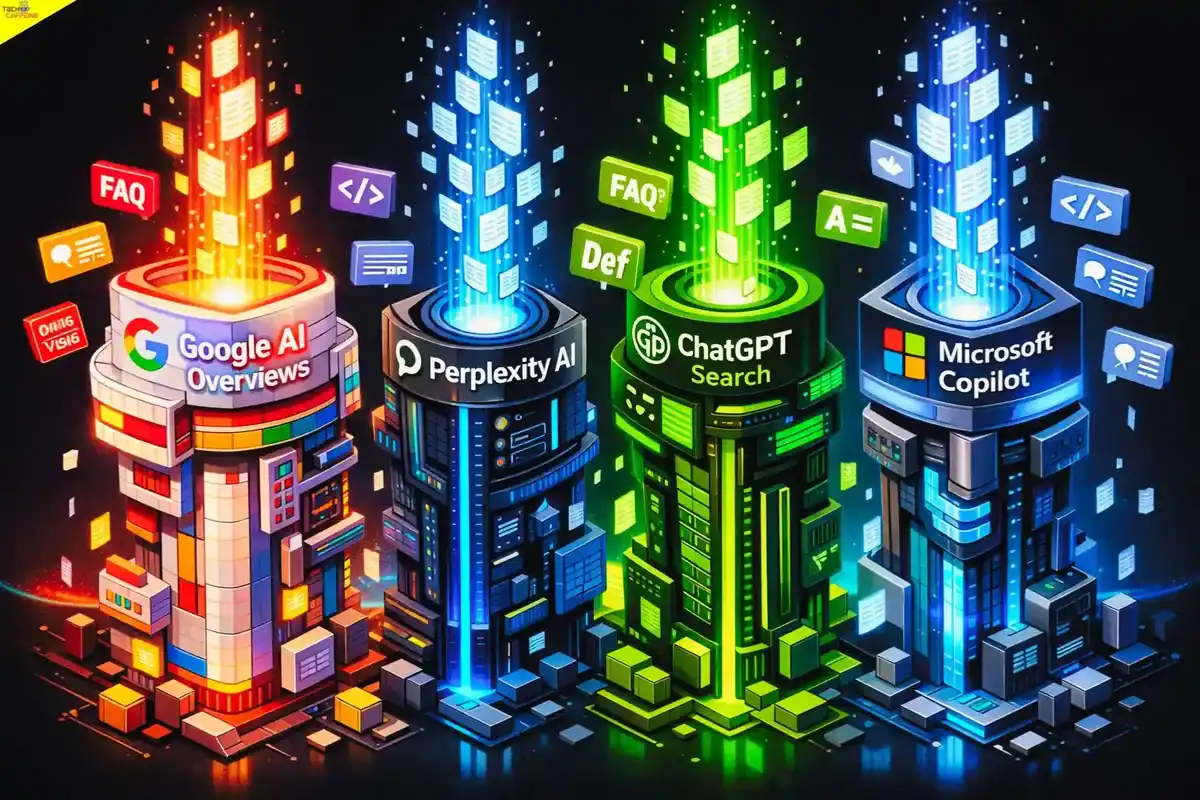
How Google AI Overviews Select Sources From Google Search
Google AI Overviews pull content from pages that already rank well in Google Search. Strong E-E-A-T signals are critical. Google looks for pages with clear author credentials, recent publication dates, and structured content. Passages that directly answer a question – in 40 to 60 words – are most likely to be cited. Schema markup (especially FAQPage and Article schema) helps Google’s AI understand your content structure.
How Perplexity AI Finds and Cites Content
Perplexity AI is an independent AI search tool. It crawls the web using its own bot (PerplexityBot). It prioritizes sources that are factually specific, well-structured, and clearly attributed. Perplexity tends to cite content that includes statistics with named sources, direct definitions, and comparison tables. It also rewards content that is updated frequently. A “Last Updated” date near the top of a page is a positive signal for Perplexity.
How ChatGPT Search Retrieves and Surfaces AI Responses
ChatGPT Search (powered by OpenAI’s AI models) uses Bing’s index as its primary web source. This means Bing indexing is a prerequisite for ChatGPT Search citation. Content that appears in ChatGPT responses tends to be from authoritative domains with clear topical focus. Like Perplexity, ChatGPT favors structured passages. It also gives weight to content that has been cited or linked to by other high-authority sources – a signal borrowed from traditional SEO.
How Microsoft Copilot Chooses Sources
Microsoft Copilot is built on Bing’s search infrastructure. It uses a combination of Bing ranking signals and its own AI reasoning layer. Copilot tends to cite sources that rank well in Bing and have strong structured data. If your content is not indexed in Bing, Copilot will not cite it. Submitting your sitemap to Bing Webmaster Tools is a basic but often overlooked GEO step for Copilot visibility.
The Role of E-E-A-T and Entity Clarity in AI Visibility
E-E-A-T stands for Experience, Expertise, Authoritativeness, and Trustworthiness. AI models are trained to prefer content from identifiable, credible sources. This means your content needs clear author attribution, named sources, and explicit entity references – tools, people, organizations, dates.
Entity clarity is equally important. Instead of “this tool,” write “Perplexity AI.” Instead of “the platform,” write “ChatGPT Search.” That simple shift improves extraction quality significantly.
GEO vs Traditional SEO: Side-by-Side Comparison
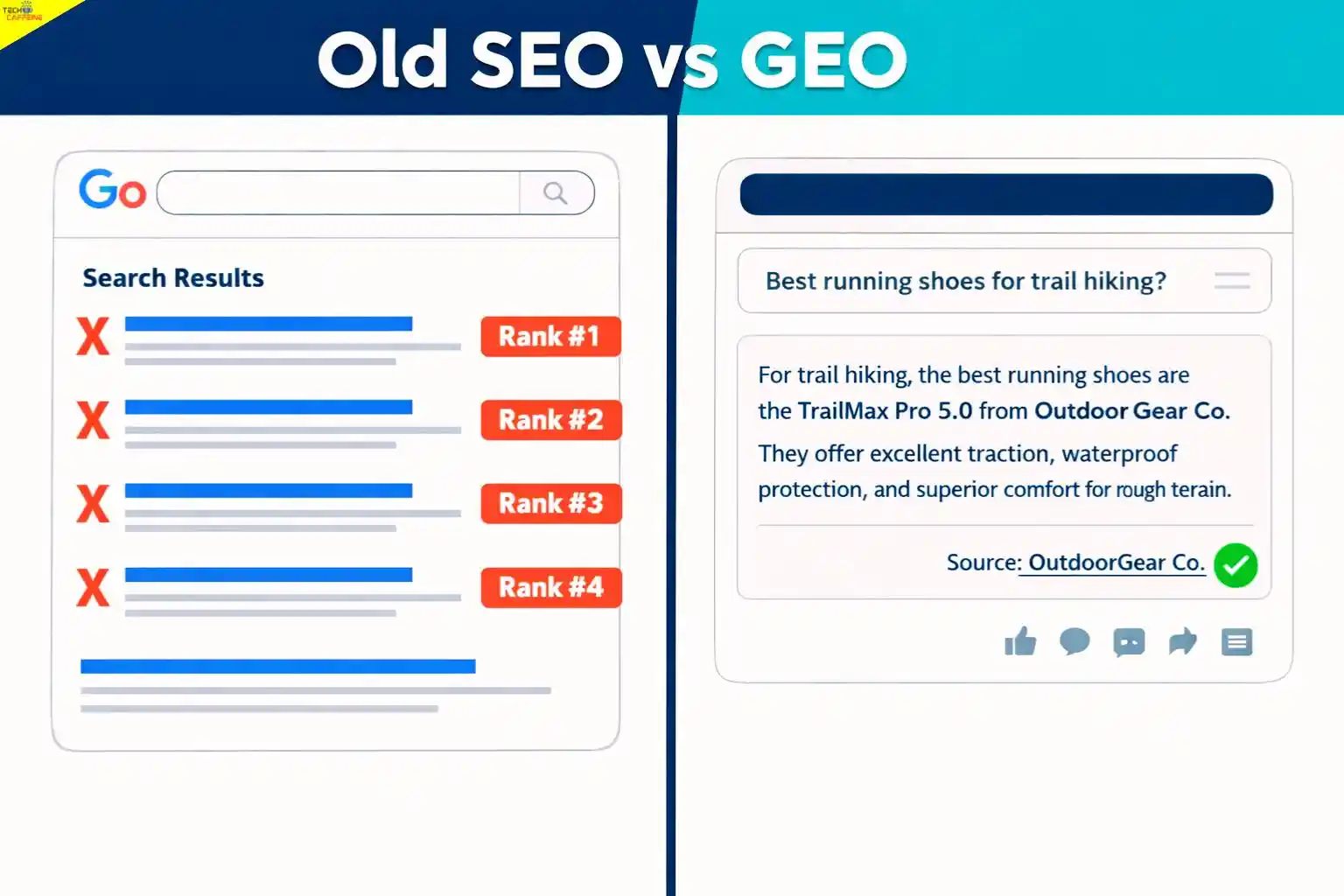
Traditional SEO and Generative Engine Optimization share some foundations. But they differ in goals, signals, and what “winning” looks like.
Traditional SEO vs Generative Engine Optimization (GEO)
Two visibility strategies with different goals, signals, and definitions of winning.
Factor |
Traditional SEO · 30–60 days
Search Engine Optimization
Rank in blue-link search results |
GEO · 2–4 weeks
Generative Engine Optimization
Get cited in AI-generated answers |
|---|---|---|
| Goal | Rank in blue-link search results | Get cited in AI-generated answers |
| Target platforms | ||
| Ranking signals | ||
| Content format | Long-form articles, keyword-optimised landing pages | Definition blocks, FAQs, comparison tables, schema markup |
| Success metric | ||
| Tools | ||
| Timeline | 30–60 days typically | 2–4 weeks for initial AI citation signals |
| Winning looks like | Page 1, position 1 in Google Search results | Your passage quoted inside an AI-generated answer |
| Work together? | Yes — Google AI Overviews primarily cite pages that already rank well in traditional search. Strong SEO is still a prerequisite for Google AI visibility. Use both strategies together. | |
Sources: Aggarwal et al. GEO paper (2023)· Search Engine Land GEO library (2026) · Semrush AI Visibility Toolkit
SEO and GEO Working Together: Why You Don’t Have to Choose
SEO and GEO are not opposites. They are complementary strategies. The best content marketing approach in 2026 combines both.
Where Traditional Search and AI Search Overlap
Both traditional SEO and GEO reward high-quality, well-structured content. Both benefit from strong E-E-A-T signals. Both improve with clear author attribution and external citations. If you build a strong SEO foundation – good indexing, clean site structure, authoritative backlinks – you also improve your GEO baseline.
GEO expert Andrew King argues that AI actually expands SEO rather than replacing it. AI systems use vector embeddings and query fan-out analysis to find relevant content. These processes rely on the same semantic signals that good SEO content already provides.
How to Build a Combined SEO and GEO Content Strategy
Start with topical authority. Pick a focused topic cluster. Create a pillar page (like this one). Support it with cluster pages that answer specific sub-questions. This structure serves both Google’s traditional ranking algorithm and AI citation models.
Then layer GEO techniques on top. Add definition blocks, FAQ sections, and comparison tables. Use schema markup. Update content regularly. Add a “Last Updated” date. These additions do not hurt your traditional SEO. They strengthen it – while also making your content more citation-ready for AI platforms.
For a practical look at AI search analytics, explore AI search analytics tools like Ziptie to track your combined performance.
8 Core GEO Optimization Techniques (With Real Examples)
These eight techniques are the practical foundation of Generative Engine Optimization. Each one directly improves your chances of being cited in AI-generated answers.
1. Write Citation-Ready Definition Paragraphs
Every article should open with a standalone definition. It should be 40–60 words. It should name the subject, explain what it does, and state who it applies to. AI engines pull these definition blocks directly into their answers.
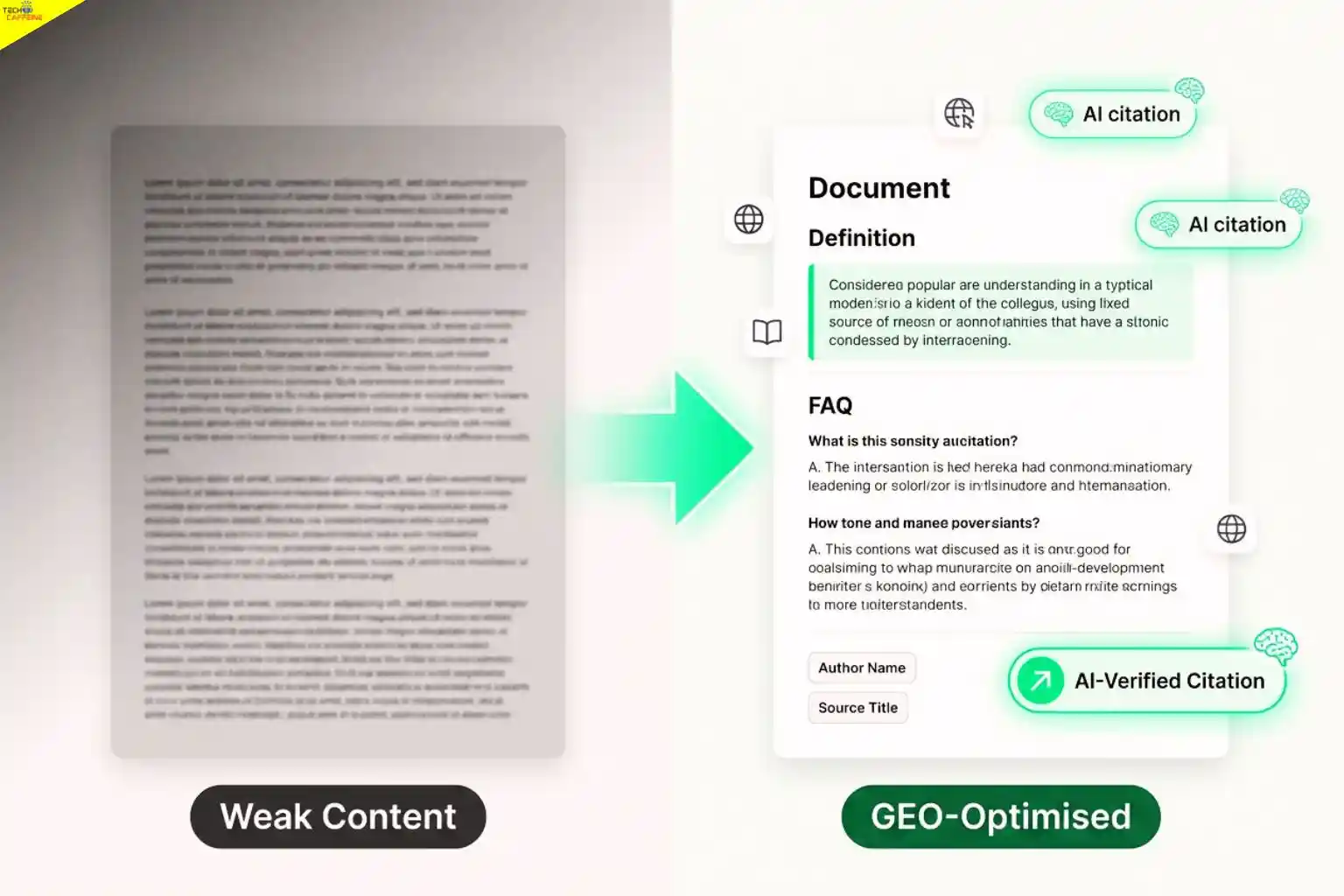
Here is what the difference looks like in practice:
Weak Content vs GEO-Optimised Content: What AI Engines Actually See
Every row shows exactly why one version gets cited and the other gets skipped by AI search engines.
Factor |
Unoptimised · AI citation rate ~0%
Weak Content
Vague, unstructured, easy to ignore |
GEO-Optimised · AI citation rate ↑ High
GEO-Optimised Content
Structured, entity-rich, citation-ready |
|---|---|---|
| Sample passage | “AI search is changing a lot these days. Many businesses are trying to figure out how to deal with it. There are different platforms and each one works differently. It can be confusing to know where to start.” | “Generative Engine Optimization (GEO) is the practice of structuring content so that AI-powered search engines — including Google AI Overviews, Perplexity, and ChatGPT Search — select it as a cited source in their generated answers. GEO applies to any brand or website that wants visibility in AI search results, not just traditional blue-link rankings.” |
| Definition clarity | ||
| Entity signals | ||
| Semantic depth | Surface-level filler. No data, no specificity, no structured claim for an AI to extract and quote. | Defines scope (“any brand or website”), distinguishes GEO from SEO, and names exact platforms — giving AI a complete, extractable answer. |
| Source attribution | ||
| Why AI acts on it | Nothing quotable. No answer to a concrete question. AI engines have no passage to cite. | Answers “what is GEO?” directly and completely. Structured passage that AI can lift verbatim as a definition block. |
| The lesson | Every article opening should answer its core question within the first 40–60 words, name the exact concept, specify the platforms or audience it applies to, and use at least one named entity. That single change is the difference between a page AI ignores and one it cites. | |
Based on: Aggarwal et al. GEO paper (2023)· Search Engine Land GEO library (2026) · Semrush AI Visibility research
The GEO-optimised version names the subject, defines it clearly, lists specific platforms, and states who it applies to. An AI engine can quote it directly. The weak version cannot be quoted – it says nothing specific.
2. Maximise Named Entity Density in Your Content
AI models build knowledge graphs from named entities. Named entities include people, tools, organizations, platforms, and research papers. Vague references like “this tool” or “some platforms” do not help AI systems classify your content.
Replace vague references with specific names. Instead of “AI search tools,” write “Perplexity AI and ChatGPT Search.” Instead of “a recent study,” write “the 2023 GEO research paper by Aggarwal et al.” Every named entity is a signal that helps AI systems understand what your content is about.
3. Use Statistics With Explicit Source Attribution
AI engines prefer verifiable claims. A statistic without a source is easy to ignore. A statistic with a named source and year is citation-ready.
Weak: “Most searches now end without a click.”
GEO-optimised: “Zero-click answers account for roughly 60% of all searches, according to Search Engine Land’s GEO news hub (2026).”
Always name the source in the sentence itself – not just in a footnote. AI systems read inline attribution as a credibility signal.
4. Structure Content With Comparison Tables
Comparison tables are among the most cited content formats in AI answers. They present information in a structured, scannable way. AI models can extract table data cleanly and use it in synthesized answers.
Every GEO-focused article should include at least one comparison table. The GEO vs SEO table earlier in this article is a good example. Tables work especially well for “X vs Y” queries – which are among the most common AI search queries.
5. Add FAQ Sections With Direct-Answer Format
FAQ sections are highly effective for GEO. Each question-and-answer pair is a self-contained passage. AI engines can quote individual FAQ answers without needing surrounding context.
Write each FAQ answer as if it will be read in isolation. Start with a direct answer. Keep it under 60 words. Avoid vague openers like “It depends” – or follow them immediately with a specific answer.
6. Implement FAQPage and HowTo Schema Markup
Schema markup tells AI crawlers exactly what your content structure means. FAQPage schema marks your FAQ section as a structured list of questions and answers. HowTo schema marks step-by-step instructions. Article schema marks your author, publication date, and update date.
Google’s AI Overviews and Microsoft Copilot both use structured data to identify citation-worthy content. Adding schema does not guarantee citation – but skipping it removes a clear positive signal.
7. Create an LLMs.txt File for Your Site
An LLMs.txt file is a plain-text file placed in your website’s root directory. It tells AI crawlers which pages on your site are most important and most suitable for AI training and citation. Think of it as a robots.txt file – but built specifically for large language models.
The format is simple. It lists your key pages with short descriptions of what each page covers. For example:
# TechCaffeine.com LLMs.txt
## Key Pages for AI Citation

- /generative-engine-optimization/ : Complete guide to GEO for SEO professionals
- /what-is-a-large-language-model/ : Definition and explainer for LLMs
LSEO’s January 2026 analysis flagged LLMs.txt as an emerging norm for AI content feeding, alongside standardized AI crawling protocols. Not every AI platform reads this file yet. But adoption is growing. Creating one now puts you ahead of the curve.
8. Build Topical Authority Before Expecting AI Citations
AI systems prefer sources that cover a topic deeply and consistently. A single well-optimised article rarely earns consistent AI citations. A content cluster – a pillar page supported by 5–10 related articles – builds the topical authority that AI models recognize.
Topical authority is not built overnight. It requires consistent publishing, internal linking, and external citation signals. Start with your most important topic. Build the pillar page first. Then create supporting content that answers the specific sub-questions your audience searches for.
Platform-Specific GEO: Best Practices for Each AI Platform
Each AI platform has different retrieval behavior, citation habits, and formatting preferences. Generic advice like “optimise for AI” is not enough. The format, depth, and structure of your content should match the specific surface you are targeting.
✅Google AI Overviews – Format, Length, and Optimize Content Rules
Google AI Overviews draw from Google’s existing indexing systems and layer generative summarization on top. That means traditional search quality signals still matter – but extractability now matters too.
Google’s official AI Overviews documentation confirms that helpful content, strong page experience, and established search quality signals remain the foundation. GEO for AI Overviews is about adding a citation layer on top of that existing foundation.
Best format for Google AI Overviews:
- Open with a 40–60 word direct-answer definition
- Use H2 and H3 headings that mirror real user questions
- Place the most important answer within the first 30% of the page
- Add at least one comparison table for factual contrast
- Include a FAQ section with 4–6 direct-answer questions near the end
- Add FAQPage and Article schema markup
- Cite named sources with statistics – vague claims get skipped
- Use short paragraphs of 2–3 sentences maximum
What to avoid: Long narrative intros, unsupported opinion, and thin sections that delay the answer. AI Overviews often pull from mid-page sections too, so every H2 should be able to stand alone as a self-contained answer block.
Choose this approach if your content already ranks in traditional search and you want better extraction into AI Overviews.
✅Perplexity AI – What Makes This AI Tool Cite a Source
Perplexity AI is the most citation-transparent of the major AI platforms. It shows source links prominently alongside answers, which makes it easier to observe what gets cited and why. Perplexity crawls the web using its own bot (PerplexityBot) and does not rely on Google’s index.
Perplexity tends to favor pages that answer the query directly and densely – not pages that build toward an answer over several paragraphs. It rewards evidence, not storytelling.
Best format for Perplexity AI:
- Start with the answer – no warm-up paragraphs
- Use query-matching subheadings so Perplexity can map sections to user questions
- Include explicit named entities in every major section
- Add “best for / not for” or “pros / cons” blocks – Perplexity surfaces these frequently
- Support key claims with source-attributed statistics
- Keep paragraphs under 60 words where possible
- Use numbered steps for any process content
Practical example: A page that opens with “Perplexity AI is an AI search tool that retrieves and synthesizes web sources into cited answers” performs better than a page that opens with “In the world of AI search, there are many tools that users can choose from.” The first sentence is extractable. The second is not.
What to avoid: Opinion-heavy intros, long background sections before the answer, and paragraphs that only make sense in context. Perplexity often pulls one passage per source – make every passage count.
✅ChatGPT Search – How OpenAI’s AI Models Retrieve Web Content
ChatGPT Search blends live web retrieval with model synthesis. Unlike a traditional search engine that shows ranked links, ChatGPT reads your content and decides whether it is trustworthy and useful enough to inform a generated answer. It may paraphrase rather than quote directly – but it still needs strong source passages to ground its response.
ChatGPT Search uses Bing’s index as its primary web source. This means Bing indexing is a prerequisite for ChatGPT Search citation. Submit your sitemap to Bing Webmaster Tools if you have not already done so.
Best format for ChatGPT Search:
- Write short, self-contained answer blocks under each subheading
- Cover adjacent questions within the same article – ChatGPT Search often expands the original query
- Name exact entities: platforms, tools, people, frameworks
- Include fresh evidence – dates, recent data, updated examples
- Add visible expertise signals: author, credentials, publication date
- Use practical trade-off sections (“when to use X vs Y”) – ChatGPT surfaces these often
- Do NOT block OAI-SearchBot in your robots.txt file
What to avoid: Answering only one narrow question and stopping. ChatGPT Search users often follow up within the same session, so pages that cover a topic deeply perform better than pages that answer one question tightly and offer nothing adjacent.
Practical example of what works: A section titled “When to Use GEO vs Traditional SEO” gives ChatGPT Search a decision-ready passage. A section titled “Overview” gives it almost nothing useful to cite.
✅Microsoft Copilot – Bing-Based AI Search Citation Signals
Microsoft Copilot runs on Bing-powered retrieval and combines it with generative summarization. Pages that already perform well in Bing have a natural advantage, but formatting still determines whether Copilot can extract and present the content clearly.
Copilot tends to reward structure and topical clarity over writing style. It is less forgiving of dense paragraphs and narrative-first writing.
Best format for Microsoft Copilot:
- Use a clear three-part structure: what it is / why it matters / how to do it
- Write short paragraphs – 2 sentences is often ideal
- Use numbered lists for any process-based content
- Include direct “bottom line” or “key takeaway” sentences that Copilot can lift without rewriting
- Ensure Bing can crawl and index the page – verify in Bing Webmaster Tools
- Add strong branded and author signals throughout
- Use structured data that matches the visible content
What to avoid: Pages that bury the main point in the middle of a long section. Copilot is especially likely to skip content that requires reading context to understand. Every H3 should contain a sentence that stands alone.
Edge case for small sites: If the content covers a niche topic with few strong competitors, Copilot may cite a low-DA page simply because it is the clearest source available. Niche precision matters more for Copilot than on some other platforms.
✅Claude (Anthropic) – How Anthropic’s AI Model Retrieves and Cites Web Content
Claude is the AI platform most likely to be embedded invisibly inside enterprise workflows. Through Amazon Bedrock, Google Cloud Vertex AI, and thousands of API integrations, optimising for Claude means optimising for an audience far larger than Claude.ai alone. Claude holds 40% market share in the enterprise AI assistant category, according to a Menlo Ventures survey – meaning B2B and research-heavy content has disproportionate citation opportunity here.
Claude uses Brave Search as its primary web retrieval layer. When a user asks a question that requires live web information, Claude reformulates the query into a more search-friendly format, retrieves the top results from Brave, and then filters and cites from that pool. Crucially, Claude does not trigger web search for stable factual questions it can answer from its training data – so content needs to add perspective, depth, or specificity beyond what the model already knows in order to earn a fetch and citation.
Claude cites inline using brackets or clickable links, not a consolidated footer list like Perplexity. This means your passage needs to be the best answer to that specific clause – not just the best page overall.
Best format for Claude:
- Open with a crisp definition or direct answer – Claude will answer from training if your intro is vague
- Use freshness signals throughout: “updated 2026,” “as of Q1 2026,” “latest research shows”
- Include comparison tables and “X vs Y” decision sections – Claude frequently surfaces these for adjacent follow-up queries
- Add schema markup: Organization, Person (author), and Article in JSON-LD with consistent @id values
- Write self-contained answer blocks of 134–167 words under each subheading – research identifies this as the optimal AI-cited passage length
- Include strong author credentials and publication date – Claude weights expertise signals heavily
- Cover adjacent questions within the same article – Claude users ask follow-up queries in the same session
- Do NOT block ClaudeBot in your robots.txt file
What to avoid: Sales-brochure language. Claude’s Constitutional AI framework is trained to flag promotional or biased framing as lower-trust content. Write like a whitepaper, not a marketing page. Also avoid content that only answers one narrow question – Claude’s enterprise users expect topical depth.
Choose this approach if your target audience includes developers, knowledge workers, researchers, or enterprise buyers who are likely using Claude as a research and synthesis tool rather than a general consumer search engine.
✅Grok (xAI) – How xAI’s Real-Time AI Platform Selects and Surfaces Sources
Grok is the only major AI platform with native, real-time access to X (formerly Twitter) data. This is not a minor distinction – it means that content mentioned, discussed, or shared on X carries a direct citation advantage inside Grok that no other platform can replicate through web content alone. Grok also has its own DeepSearch and DeeperSearch web retrieval tools, and in October 2025 launched Grokipedia, an AI-generated encyclopedia that is expected to become an increasingly important intermediary source for Grok’s answers.
Grok is trained to be conversational, direct, and willing to engage with topics that more cautious AI platforms may deflect. It rewards content that is factually dense and current – not content that hedges, qualifies excessively, or delays the answer with background context.
Best format for Grok:
- Lead with the most current version of the answer – include a specific date, stat, or data point in the first sentence
- Use timestamps and “as of [date]” markers throughout – Grok indexes freshness as a primary trust signal
- Write in a direct, confident tone – Grok’s retrieval favors content that matches its own voice: clear, unhesitant, and specific
- Make your content shareable and discussion-worthy on X – social signal weight is unique to Grok among AI platforms
- Include real-time statistics, recent case studies, and references to current developments rather than evergreen-only content
- Structure content with clear “what’s new” or “latest update” sections that Grok can anchor to a specific moment in time
- Ensure your brand or entity is mentioned naturally across X conversations and public social discourse – this is a GEO signal that only Grok reads
- Use Grokipedia as a monitoring target: if your topic has a Grokipedia article, ensure your brand is accurately represented in it, as Grok citations increasingly flow through this layer
What to avoid: Static, evergreen-only content with no temporal anchoring. Grok will deprioritise a page that reads identically whether it was written in 2022 or 2026. Also avoid dense, context-dependent paragraphs – Grok pulls single passages, and each passage should stand alone as a complete, self-sufficient answer.
Edge case for trending topics: Because Grok monitors X in real time, a brand that becomes part of an active X conversation – through thought leadership posts, replies, or threads – can achieve Grok citation visibility within hours, not weeks. No other AI platform has this accelerated citation path.
Choose this approach if your content covers fast-moving topics: technology releases, market events, regulatory changes, cultural trends, or anything where being the most current source is more valuable than being the most comprehensive one.
GEO for Small Websites and Blogs (Not Just Big Brands)
Small websites can win GEO by being clearer, narrower, and more useful than larger sites. High DA helps, but it is not the only path to citations in generative engines.
Why Small Sites Can Win AI Visibility Without High DA
Small sites often have an advantage in niche precision. A focused blog can answer a narrow question better than a large brand page designed for broad traffic.
That matters because GEO focuses on passage quality, not only domain-level reputation. If your article is the clearest source on a specific subtopic, AI engines may cite it even if the site is not famous.
Examples where small sites can compete:
- niche software workflows
- local market explainers
- expert process guides
- original frameworks
- first-hand testing writeups
Search Engine Land’s February 2026 guide also noted that engine-specific strategies can help smaller publishers counter the “big brand bias” seen in some AI results.
3 Specific GEO Strategies for Independent Blogs and Low-DA Sites
✔️Strategy 1 – Own a narrow query cluster completely
Instead of targeting “AI marketing” or “generative engine optimization” broadly, build around one specific problem no large site has answered well. Examples:
- “How to optimize for Google AI Overviews as a local service business”
- “GEO strategies for SaaS blogs with under 10,000 monthly visitors”
- “How Perplexity AI cites B2B content differently from B2C content”
The goal is to become the clearest, most complete source on one narrow angle. A large brand’s GEO guide covers everyone. Yours covers one specific reader problem better than anyone else. That precision is what makes AI engines choose a small site over a large one.
Build at least 3–5 supporting pages around the narrow angle – not just one article. AI systems trust sites that cover a topic repeatedly, not sites that have one good page surrounded by unrelated content.
✔️Strategy 2 – Publish first-hand experiments and original observations
Small publishers can move faster than large editorial teams. A practical experiment with documented results often outperforms a comprehensive summary of existing knowledge – because it adds genuine information gain that AI systems cannot find elsewhere.
Examples of useful first-hand content:
- “I rewrote 5 article intros using GEO principles – here is what changed in AI citations after 30 days”
- “We tested 3 FAQ formats across 10 articles – this one got cited most in Perplexity”
- “Before and after: how adding named entities to subheadings changed our AI search visibility”
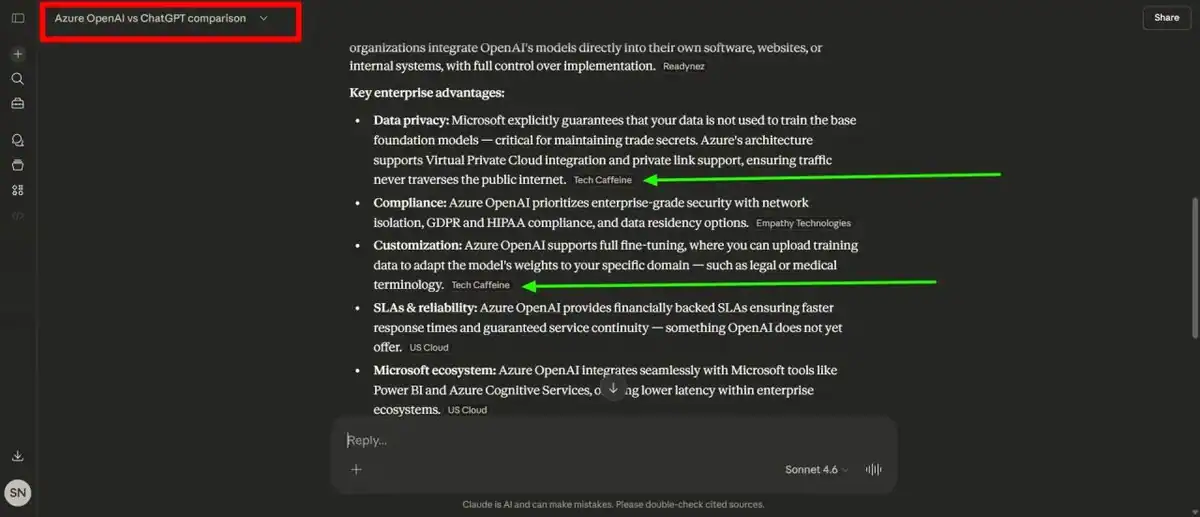
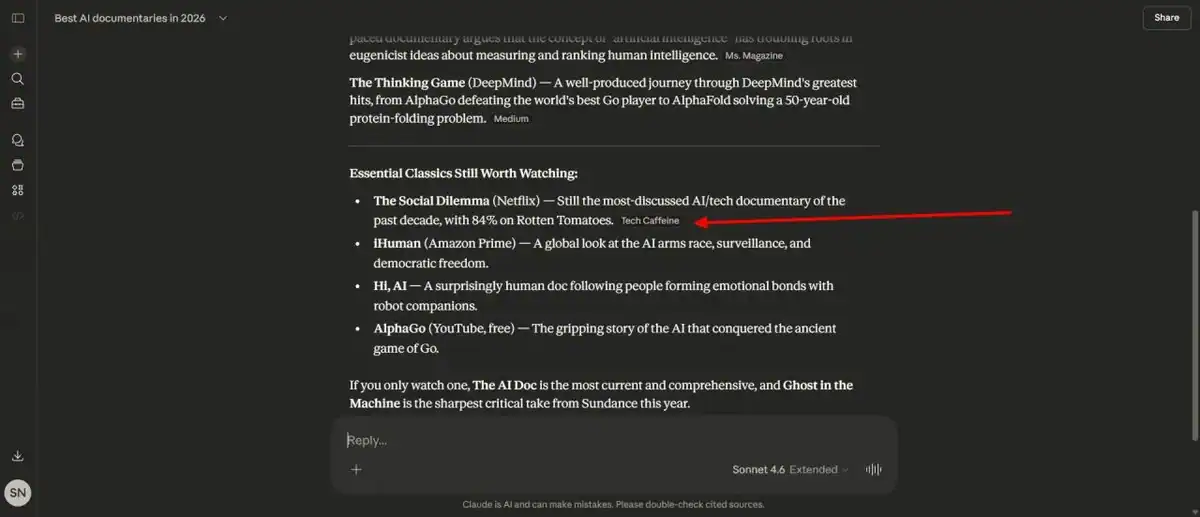
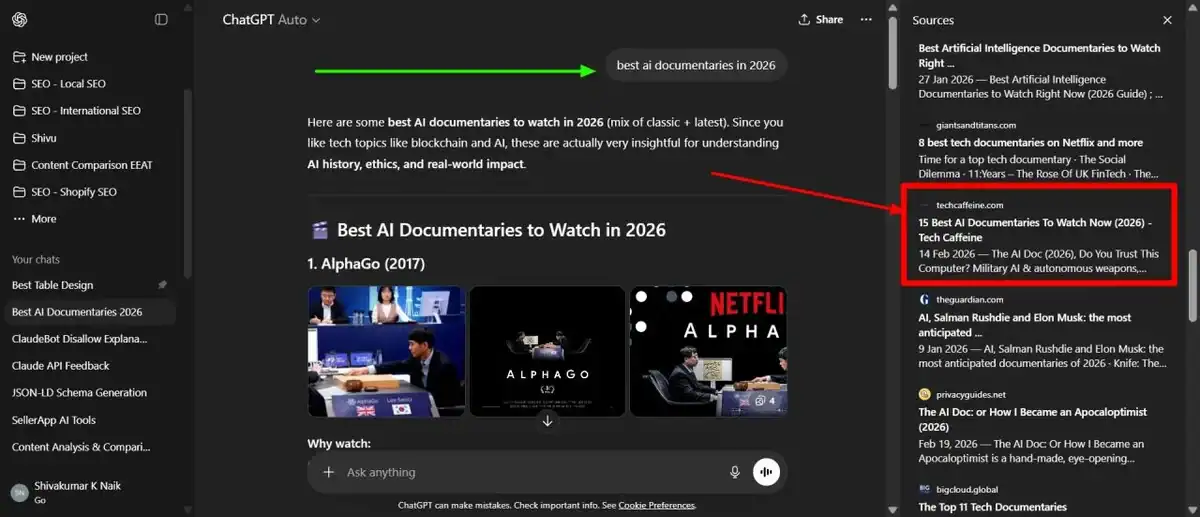
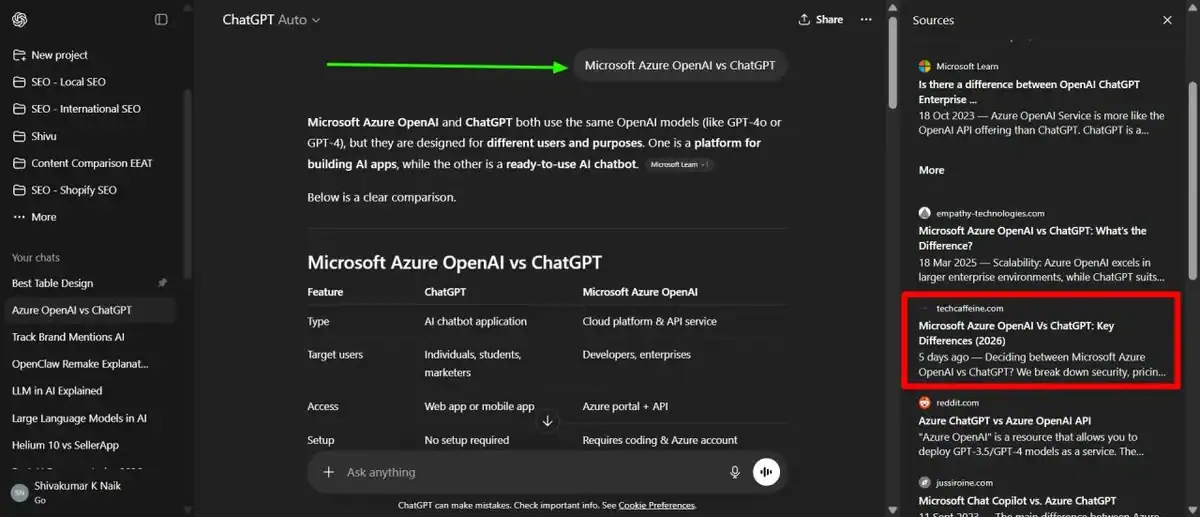
Real-World Proof: How TechCaffeine Earned 4 AI Citations in One Month
To prove this strategy works, I ran my own first-hand experiment. I wanted to see if high-quality passage optimization could beat massive domain authority.
By heavily structuring two specific articles –“Best AI Documentaries in 2026” and “Microsoft Azure OpenAI vs ChatGPT” – I earned four direct citations from ChatGPT and Claude in a single month.
After analyzing why these specific pages were chosen over my higher-DA competitors, I found five consistent triggers:
Experiments like this do not require a large budget. They require observation, documentation, and honest reporting. That kind of original content is exactly what generative engines are designed to surface – because it cannot be replicated by a summary bot.
✔️Strategy 3 – Build trust infrastructure that reduces ambiguity
AI systems look for confidence signals when deciding whether a small site is trustworthy enough to cite. Many small sites lose citations not because the content is weak but because the trust layer is missing.
Minimum trust infrastructure for GEO:
- Author bio page with name, photo, credentials, and areas of expertise
- About Us page that explains who runs the site and why
- Contact page with a real email address
- Editorial policy or disclosure page explaining how content is produced and updated
- Consistent author attribution on every article – not “Staff Writer” or left blank
- Update dates visible near the top of all important pages
These pages reduce the ambiguity that causes AI systems to pass over an otherwise strong article. A well-written GEO guide with no author attribution is less likely to be cited than a slightly shorter guide with a clear expert byline and a transparent editorial process.
How to Earn Brand Mentions That AI Systems Pick Up
AI systems pick up brand mentions – even without links. Unlinked brand mentions are a strong signal in AI citation models. Here are three specific tactics to earn them.
✔️Tactic 1 – Become the Primary Source for a Niche Angle in Digital Marketing
Pick one narrow niche angle and publish the strongest, most original resource on it that currently exists. The goal is not to rank for the broadest keyword – it is to own one specific answer so completely that any AI system covering that topic has no better option than to cite you.
How to execute:
- Identify a specific subtopic within your niche that large sites cover shallowly
- Publish a definitive resource – original data, detailed process, or first-hand testing results
- Build 3–5 supporting pages that reference the primary resource by name
- Create a downloadable asset (checklist, template, or framework) tied to the resource
- Promote the resource specifically to other writers and content teams in your niche – not just to readers
Example for TechCaffeine: Instead of “GEO guide for everyone,” publish “GEO Visibility Report: How Indian Tech Brands Appear in AI Search Results.” That specific angle – Indian tech brands in AI search – is uncovered by every major GEO resource. Any AI system answering a question about GEO in the Indian market would have no better source to cite.
This works because AI systems absorb signals from repeated web references. The more your brand is associated with one specific concept across multiple pages and external mentions, the more confidently AI models include you when that concept appears in a user query.
✔️Tactic 2 – Get Cited in Already-Cited High-Authority Content
AI engines trust sources that other trusted sources reference. The fastest path to GEO visibility for a new or mid-sized site is to contribute something valuable to pages that already appear in AI responses.
How to execute:
- Run 10–20 prompts in Perplexity or ChatGPT Search for your target keywords
- Note which pages appear as cited sources consistently
- Read those pages and identify what is missing – a data point, a definition, a comparison, an example
- Create that missing element on your own site
- Reach out to the author or editor offering your specific contribution – not a generic link request
What to offer:
- An original statistic or benchmark they can cite
- A concise definition they can reference
- A before/after example that illustrates a point they make vaguely
- A named framework that formalises their process
Use tools like the Semrush AI Visibility Toolkit to identify which pages are already being cited in AI answers for your target keywords.
✔️Tactic 3 – Create a Named Framework or Methodology
Named frameworks are among the most durable GEO assets a small or mid-sized site can create. A framework turns a process into a citable concept with a specific name attached to your brand.
AI systems find it easier to reference a named framework than a vague process. “Use the Citation-Ready Intro Method” is more extractable than “write better introductions.” The name creates an entity. The entity can be cited.
How to build a citable framework:
- Identify a repeatable process you use or recommend
- Give it a clear, memorable name – 2–4 words, ideally with an acronym or alliteration
- Publish a dedicated page explaining the framework in detail
- Reference the framework by name across all related articles on your site
- Include the framework name in image alt text, schema, and meta descriptions
- Mention it in guest posts, podcast appearances, and social content
Examples of named frameworks that earned AI citations:
- “The Skyscraper Technique” – Brian Dean / Backlinko
(link building method, cited in hundreds of SEO articles) - “The Hub and Spoke Model” – HubSpot
(content strategy framework, widely referenced in marketing content) - “The PESO Model” – Gini Dietrich / Spin Sucks
(PR framework for Paid, Earned, Shared, Owned media)
Once the framework is published and referenced consistently across your site, it becomes a named concept associated with your brand. When a user asks an AI system about GEO content strategy, a well-documented named framework is exactly the kind of attributable, structured information those systems prefer over generic advice.
How to Measure Your GEO Performance and AI Visibility
GEO measurement should connect citations to business outcomes, not stop at screenshots. The core question is simple: are AI mentions increasing qualified visibility, visits, and assisted conversions?
Setting Up AI Referral Traffic Tracking in GA4
Google Analytics 4 (GA4) can show you traffic from AI platforms. Here is how to set it up:
- Go to GA4 > Reports > Acquisition > Traffic Acquisition.
- Add a secondary dimension: “Session source/medium.”
- Filter for sources containing: “perplexity.ai,” “chat.openai.com,” “bing.com/chat,” “gemini.google.com.”
- Create a custom segment for AI referral traffic.
- Set up a monthly report to track volume changes.
This gives you a direct view of how much traffic AI citations are driving. It is the most straightforward GEO ROI measurement available. Learn more about how to track your brand mentions in AI search for a more complete tracking setup.
Tools for Monitoring AI Search Visibility and Brand Mentions
- Semrush AI Visibility Toolkit – tracks your brand’s citation frequency across major AI platforms
- Ziptie – an AI search analytics tool that monitors AI referral traffic and citation patterns
- BrandMentions – tracks unlinked brand mentions across the web and AI-generated content
- Bing Webmaster Tools – monitors your Bing indexing status, which affects ChatGPT and Copilot visibility
- Google Search Console – tracks traditional search performance, which feeds into Google AI Overviews eligibility
External resources:
- Princeton GEO research paper by Aggarwal et al.
- Google’s official AI Overviews documentation
- Semrush AI Visibility Toolkit
Key Metrics: Citation Rate, AI Visibility Score, Share of Voice
| Metric | What It Measures | How to Track |
|---|---|---|
Citation rate | How often your content is cited in AI-generated answers |
Semrush AI Visibility Toolkit
Manual AI query testing |
AI visibility score | Your brand’s overall presence in AI-generated results |
Semrush AI Visibility Index |
AI referral traffic | Visits from AI platforms (Perplexity, ChatGPT, etc.) |
GA4 custom segment |
Share of voice | Your citation rate vs. competitors for target queries |
Manual testing
Semrush |
Unlinked brand mentions | Times your brand is named in AI answers without a hyperlink |
BrandMentions
Manual AI query testing |
How to Run a Monthly GEO Audit
A monthly GEO audit has two goals: identify where your brand is being cited and identify where it should be cited but is not. The gap between those two lists is your content action plan.
Step 1 – Build a prompt library (one-time setup) Write 20–50 prompts that represent real queries your target audience asks. Include:
- definition queries (“what is generative engine optimization”)
- comparison queries (“GEO vs SEO”)
- how-to queries (“how to optimize for Perplexity AI”)
- brand-adjacent queries (“best tools for AI search visibility”)
Save these in a spreadsheet. Run them every month across Google AI Overviews, Perplexity, and ChatGPT Search.
Step 2 – Record citation status for each prompt For each prompt, record:
- Is your brand cited? (Yes / Paraphrased / Absent)
- Which page is cited if yes?
- Which competitors are cited instead if absent?
- Has the status changed vs last month?
Step 3 – Diagnose pages with zero citations For each page that should be cited but is not, run a quick 5-point check:
- Does the intro have a standalone definition?
- Are named entities present in the first H2?
- Is there at least one table or list?
- Is the author and date visible?
- Has the page been crawled recently?
Fix the weakest element first – usually the intro or the missing named entity density.
Step 4 – Update weak content Rewrite intro paragraphs on underperforming pages using the citation-ready definition format. Update statistics with current dates. Add one comparison table or FAQ block to any page missing both.
Step 5 – Refresh LLMs.txt and resubmit URLs After any content update, add the URL to your LLMs.txt file if not already present and submit it for recrawl in Google Search Console and Bing Webmaster Tools.
Step 6 – Log business impact At the end of each monthly audit, record:
- Change in GA4 referral sessions from AI sources
- Change in branded search volume
- New external mentions or citations found via brand monitoring tools
Lightweight version for small sites: Run 10 prompts per month, check Perplexity and ChatGPT only, and fix one page per audit cycle. Small consistent improvements compound faster than one large annual overhaul.
Full version for sites where AI is a top channel: Run 50+ prompts monthly across all four major platforms, maintain a citation share-of-voice tracker against 3–5 competitors, and review GA4 AI referral segments weekly.
GEO Pre-Publish Checklist (12 Points)
Use this checklist before publishing any article you want to appear in AI-generated search results. Each item is one action. Tick it off before you hit publish.
Common GEO Mistakes That Kill Your AI Visibility
Avoid these seven mistakes. Each one directly reduces your chances of being cited in AI-generated answers.
What Is a GEO Mistake?
Common GEO Mistakes That Kill Your AI Visibility
Avoid every item on this list before publishing any article targeting AI search
What GEO Mistakes Should You Avoid?
Seven errors that prevent AI engines from extracting, trusting, or citing your content
What Is the Future of Generative Engine Optimization?
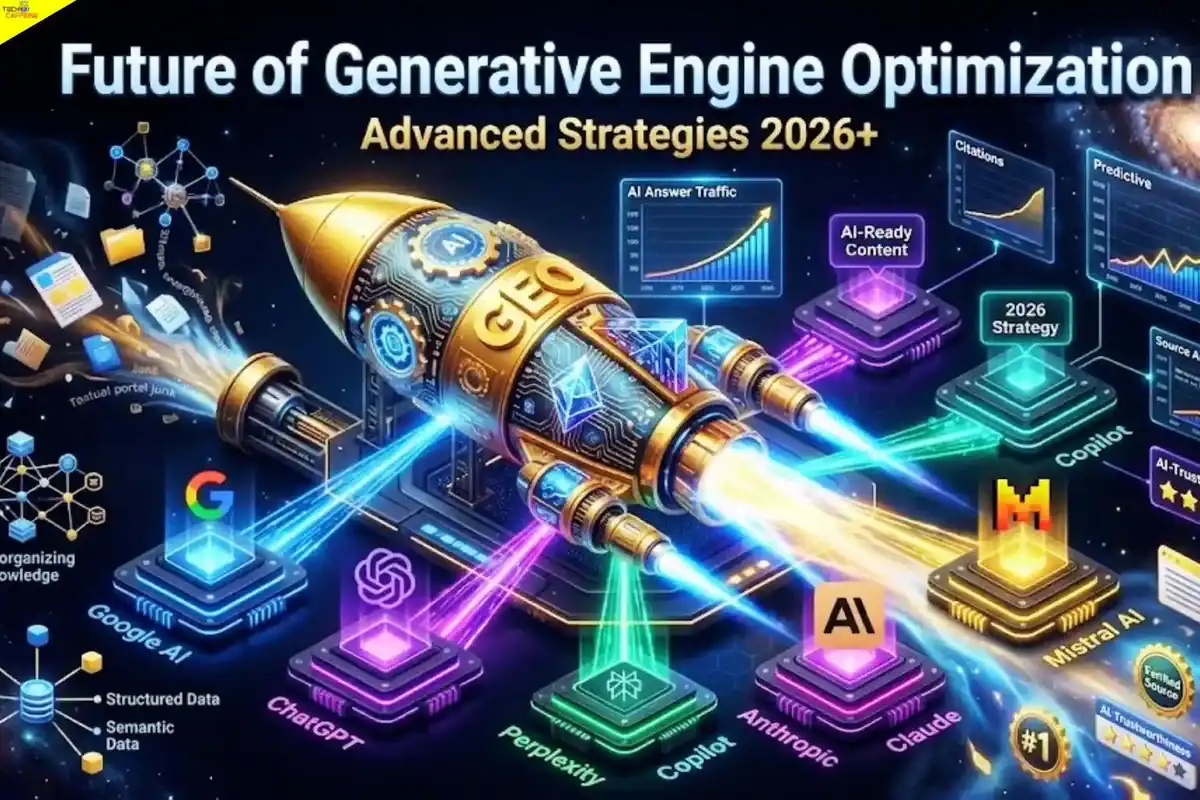
The future of GEO is big, fast, and already happening. AI search is not slowing down. It is growing into the default way people find information and that changes everything for brands that want to stay visible online.
AI Search Will Become the Default
The numbers make this clear. AI platforms drove 1.13 billion referral visits in June 2025 – a 357% jump from just one year earlier, according to Similarweb, as reported by Exposure Ninja’s AI Search Statistics report. That kind of growth does not slow down on its own.
The shift is already reshaping how people find answers. Instead of clicking through a list of links, users ask a question and get one clear answer with sources built in. As AI assistants get built into phones, browsers, and work tools, more queries will go to generative engines not search result pages.
For brands, this means GEO will stop being optional. It will become as basic as having a website.
GEO Will Expand Beyond Text
Right now, most GEO advice focuses on written content. That will change. AI platforms like Google Gemini and ChatGPT already read images, audio, and video not just text. As these tools get smarter, GEO will need to cover more than paragraphs.
Future GEO will include:
- Image alt text written so AI can extract meaning from it
- Video transcripts structured like answer-ready passages
- Infographics paired with machine-readable schema markup
- Audio content tagged with timestamps and clear metadata
If you only optimize your text, you will miss citation opportunities. Competitors who optimize across all formats will capture them instead.
Personalized AI Answers Will Reward Niche Content
Today, two people asking the same question in Perplexity or ChatGPT get roughly the same answer. That is about to change. AI platforms are starting to personalize results based on location, role, history, and context.
A product manager and a student asking the same GEO question may get different sources cited in their answers. This means broad content written for everyone will lose ground to focused content written for a specific reader. Niche authority already a strong GEO signal for small sites will matter even more as AI search becomes more personal.
The lesson is simple: go deep on one audience rather than wide across many.
AI Agents Will Change How Content Gets Found
One of the biggest shifts coming is the rise of AI agents. These are tools that research topics, write reports, and make decisions – all without a human typing a search query. Tools like OpenAI’s Operator and Google’s Project Mariner are already in early use.
When an AI agent researches a topic, it does not browse a search page. It reads sources, pulls structured passages, and builds answers automatically. The content it trusts is content that is clear, specific, and well-structured. That is exactly what GEO already optimizes for.
In short: GEO is not just about appearing in search results. It is about being the source that AI agents choose when they work on behalf of your future customers.
AI Crawling Standards Will Get More Formal
Right now, the LLMs.txt file is an early-stage tool that tells AI crawlers which pages on your site matter most. It is already gaining traction among forward-thinking publishers. In the future, these standards are expected to become as routine as submitting a sitemap – a basic step no serious site will skip.
These evolving standards may soon let publishers:
- Choose which AI platforms can cite specific pages
- Flag updated content without waiting for a full recrawl
- Request inline attribution rather than paraphrase
- Block certain sections from AI synthesis while keeping them visible to readers
Getting familiar with these tools now puts you ahead of the curve before they become required practice.
Measuring GEO Will Get Easier and More Precise
Today, tracking your AI citations often means running manual prompts in Perplexity and ChatGPT and noting what you find. That works – but it takes time. Dedicated AI visibility platforms are already building automated citation tracking, share-of-voice reporting, and AI referral attribution. The same way rank trackers transformed traditional SEO measurement, these tools will do the same for GEO.
The timing matters. According to Semrush’s AI SEO Statistics report, AI search traffic is projected to surpass traditional search traffic by 2028 – and the average AI search visitor is already 4.4 times more valuable than a traditional organic search visitor from a conversion standpoint. Brands that build their GEO measurement setup now will have cleaner data and better decisions as that shift arrives.
Citation rate, AI referral sessions, and share of voice will become standard marketing metrics – just like click-through rate and keyword ranking are today.
What This Means for You
The future of GEO rewards the same things it rewards today – just at a bigger scale and across more content types. The brands that win long-term AI visibility will:
- Optimize across formats – text, images, video, and data
- Build topic clusters, not single standalone articles
- Set up measurement tools before AI search matures further
- Adopt LLMs.txt and AI crawling standards early
- Write content that AI agents can use, not just human readers
The direction is clear. Generative engines are becoming the main bridge between brands and the people they want to reach. GEO is how you stay visible, trusted, and cited inside that bridge – today and as it keeps evolving.
Frequently Asked Questions About Generative Engine Optimization
How long does it take to appear in AI search results?
GEO shows faster initial signals than traditional SEO. Most well-optimised content begins appearing in AI citations within 2–4 weeks of publication. However, consistent citation across multiple platforms takes longer – typically 2–3 months of regular content updates and topical authority building.
Does GEO replace traditional SEO and traditional search ranking?
No. GEO and traditional SEO work together. Google AI Overviews primarily cite pages that already rank well in traditional Google Search. Strong SEO is still a prerequisite for Google AI visibility. GEO adds a layer of optimization on top of your existing SEO foundation – it does not replace it.
Do backlinks still matter for generative engine optimization?
Yes, but their role is different. Backlinks from high-authority domains signal credibility to AI models – especially for ChatGPT Search, which uses Bing’s link-based ranking signals. However, unlinked brand mentions also carry significant weight in AI citation models, according to Semrush’s research. Both linked and unlinked citations matter for GEO.
What content formats work best for AI-generated responses?
Definition paragraphs (40–60 words), FAQ sections with direct answers, comparison tables, and numbered step-by-step guides are the most frequently cited formats in AI-generated answers. These formats are self-contained, structured, and easy for AI models to extract and quote.
Is GEO relevant for small websites and blogs?
Yes. Small sites with deep niche expertise can earn consistent AI citations – especially on Perplexity AI, which actively cites specialist sources. The key is specificity: cover one topic deeply, update content regularly, and use structured formats. Domain authority matters less for GEO than topical authority and content structure.
How is GEO different from Answer Engine Optimization (AEO)?
AEO focuses on winning zero-click featured snippets in traditional Google Search. GEO is broader – it covers citation across all AI-powered platforms, including Perplexity, ChatGPT Search, Microsoft Copilot, and Google AI Overviews. GEO also includes multimodal content signals and personalization factors that AEO does not address.
Can I track which AI tool or AI engine is sending me traffic?
Yes. In Google Analytics 4, you can filter traffic by source to identify visits from perplexity.ai, chat.openai.com, bing.com/chat, and gemini.google.com. This gives you a direct view of AI referral traffic by platform. The Semrush AI Visibility Toolkit and tools like Ziptie provide more detailed AI citation tracking beyond GA4.
Conclusion: Start Your GEO Strategy Today
Generative Engine Optimization is not a future concern. It is a present-day priority for any brand that wants to stay visible as AI search continues to grow.
The core principle is simple. AI engines cite content that is clear, structured, specific, and authoritative. Every technique in this guide – from definition paragraphs to LLMs.txt files to named entity density – serves that one goal.
Here are your immediate next steps:
- Audit your top 5 articles using the 12-point GEO checklist above.
- Add a definition block and FAQ section to any article missing them.
- Create your LLMs.txt file and list your most important pages.
- Set up AI referral traffic tracking in GA4 using the method in this guide.
- Run a manual citation test – search your target queries in Perplexity and ChatGPT Search and see who is being cited today.
GEO is a long-term strategy. But the actions that move the needle are specific and achievable. Start with one article. Apply the checklist. Measure the results. Then scale what works.

Shivakumar K Naik is an SEO Analyst and Technology Writer based in Mysore, Karnataka with 2.5+ years of experience and 28+ client success stories across FinTech, Travel, Automotive, SaaS and Education. He has delivered 150+ Google first-page rankings for brands like Mudrex, Decathlon and Maruti Suzuki. On Tech Caffeine, he writes practical, beginner-friendly guides on AI tools, how to make money online with AI, cryptocurrency, blockchain, NFTs, gaming and emerging technology content built from real SEO experience and daily hands-on use of ChatGPT, Claude, Ahrefs and Semrush.